

You’re filling out a shipping label or reading a recipe, and there it is: tare. Or maybe you just ripped a page and want to know if you spelled it right.
Either way, “tear” and “tare” sound almost identical but mean completely different things, and mixing them up in a form or a formal document can look sloppy fast.
Quick Answer – Tear or Tare
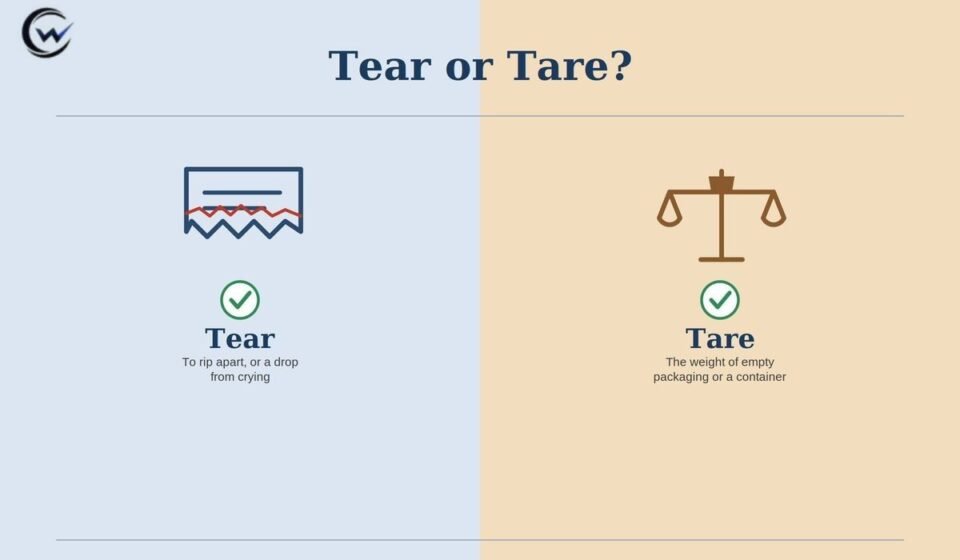
Tear has two meanings depending on pronunciation. As a verb (rhymes with “hair”), it means to rip something apart. As a noun (rhymes with “here”), it means a drop of liquid from your eye.
Tare is a different word entirely. It refers to the weight of empty packaging, like a container or vehicle, before you add the actual product. Tare is common in shipping, farming, and manufacturing.
What Does Tear Mean
Tear is one of those unusual English words with two distinct pronunciations and meanings, depending on context.
When it rhymes with “hair” (rhymes with “wear”), tear is a verb meaning to rip, pull apart, or damage something by force. You tear a piece of paper. Fabric tears at the seams. A muscle can tear during a workout.
When it rhymes with “here” (rhymes with “beer”), tear is a noun describing the salty liquid that falls from your eyes when you cry or when your eyes water from irritation. “A tear rolled down her cheek” uses this second meaning. Both spellings are identical. Only the pronunciation and context tell you which one is meant, which is part of what makes tear a heteronym, a word that’s spelled the same but pronounced differently based on meaning.
What Does Tare Mean
Tare is a noun (and sometimes a verb) with a much narrower, more technical use. In shipping, logistics, and manufacturing, tare weight refers to the weight of an empty container, box, or vehicle before anything is loaded into it.
For example, if you’re weighing a truck full of gravel, the tare weight is what the empty truck weighs on its own. Subtract that from the total loaded weight, and you get the actual weight of the gravel, called the net weight.
Tare also shows up as a button on digital kitchen scales. Pressing “tare” resets the scale to zero after you place an empty bowl on it, so you only measure the ingredients you add afterward. There’s also an older, less common meaning: tare can refer to a weedy plant, specifically a type of vetch mentioned in the Bible (the parable of the wheat and the tares). This usage is rare outside of literary or religious contexts, but it explains why some readers encounter the word unexpectedly.
Tear vs Tare: Side by Side
| Word | Pronunciation | Part of Speech | Meaning | Example |
| Tear | rhymes with “hair” | Verb | To rip or pull apart | She had to tear the envelope open. |
| Tear | rhymes with “here” | Noun | A drop from crying | A tear fell as she read the letter. |
| Tare | rhymes with “hair” | Noun | Weight of empty packaging | The tare weight of the box is 2 pounds. |
| Tare | rhymes with “hair” | Noun (rare) | A weed or vetch plant | The tares grew alongside the wheat. |
Where Tear Comes From
Tear traces back to Old English, and interestingly, the two meanings come from two entirely different root words that just happened to end up spelled the same way over centuries of language change.
The “rip apart” version comes from the Old English word teran, related to German zehren, both carrying the sense of tearing or wearing something down.
The “eye drop” version comes from the Old English tear or teahor, connected to Latin lacrima and Greek dakru, both ancient words for tears shed from crying. Despite the shared modern spelling, these two words never had a common origin. It’s a coincidence of English spelling reform over the centuries.
More Confusing Words Made Simple: Steer or Stear
Where Tare Comes From
Tare in the shipping and weight sense comes from Old French tare, which itself came from Arabic ṭarḥ, meaning “deduction” or “that which is thrown away.” It traveled through trade routes across the Mediterranean before settling into English commercial language centuries ago.
The plant sense of tare, the weedy vetch, comes from an older Germanic or possibly unrelated root and shows up mainly in older English translations of religious texts.
How to Use Tear in a Sentence
As a verb (rip):
- Please don’t tear the wrapping paper, we’re saving it.
- The dog managed to tear a hole in the couch cushion.
- He felt a muscle tear during the second set of squats.
As a noun (eye drop):
- A single tear escaped before she could stop it.
- His eyes filled with tears at the graduation ceremony.
- Wipe that tear away, everything’s fine now.
How to Use Tare in a Sentence
- The tare weight of the shipping container must be listed on the manifest.
- Remember to hit tare before adding the flour to the bowl.
- Once you subtract the tare, the actual product weighs 40 pounds.
- The invoice separates gross weight, tare weight, and net weight for clarity.
Common Mistakes People Make
The most frequent mix-up happens in written business or logistics contexts. Someone means to write “tare weight” but types “tear weight” instead, since the words sound so close when spoken aloud.
The reverse mistake is rarer but still happens: writing “tare” when the intended word was “tear,” usually in casual or fast typing, especially on mobile devices where autocorrect can swap similar-looking words.
Another mix-up involves a third word entirely: tier, meaning a level or layer, which some writers confuse with both tear and tare because all three sound vaguely alike in fast speech. Tier has nothing to do with ripping, crying, or shipping weight.
A Simple Way to Remember the Difference
Here’s a trick that sticks: tare almost always shows up near numbers, scales, or weights. If you’re reading about shipping, cooking measurements, or trucking, and you see “tare,” it’s about weight, not emotion or ripping.
Tear, on the other hand, connects to either physical action (ripping) or physical emotion (crying). If the sentence involves fabric, paper, or feelings, you’re looking at tear.
Tear and Tare in Professional Writing
In logistics, manufacturing, and retail industries, getting tare right matters for accuracy. Mislabeling tare weight on shipping documents can cause billing disputes, since customers are often charged based on net weight, not the weight of the packaging.
In everyday writing, whether it’s a novel, an email, or a social post, tear is by far the more common word of the two. Unless your writing specifically touches on shipping, scales, or farming terminology, you’ll rarely need tare at all.
More Confusing Words Made Simple: Eventhough or Even Though
Related Words Worth Knowing
Torn is the past participle of tear (the ripping version): “The letter was torn in half.”
Tore is the simple past tense: “She tore the letter before mailing it.”
Net weight and gross weight are terms that frequently appear alongside tare weight in shipping and manufacturing documents, and understanding all three together makes reading invoices and manifests much easier.
FAQs
Is tare a real English word?
Yes. Tare is a legitimate word used primarily in shipping, manufacturing, and cooking to describe the weight of empty packaging before adding contents.
Why do tear and tare sound so similar?
Both words share the same vowel sound pattern when tear is pronounced as a verb (rhyming with “hair”), which causes frequent confusion in speech and writing, especially in fast or informal contexts.
Does tear always rhyme with “hair”?
No. Tear has two pronunciations. As a verb meaning to rip, it rhymes with “hair.” As a noun meaning a crying drop, it rhymes with “here.”
What is tare weight used for?
Tare weight lets shippers, manufacturers, and cooks calculate the true weight of a product by subtracting the container’s weight from the total combined weight.
Can tare mean anything other than weight?
Yes, though rarely. Tare can also refer to a type of weedy vetch plant, a usage found mostly in older or religious texts, such as certain biblical parables.
Final Takeaway
Tear and tare might sound nearly identical, but they belong to completely different worlds. Tear covers ripping and crying, two very human actions.
Tare belongs to scales, shipping labels, and measurement. Once you connect tare to weight and tear to emotion or fabric, the confusion tends to disappear for good.