

You saw it in a caption. Someone called their brunch order “boujee,” and someone else swore it’s spelled “bougie.” Now you’re stuck typing it into a group chat, deleting it, and typing it again because neither version looks right anymore.
That’s the bougie or boujee problem in a nutshell. One word, two spellings, and a lot of confused typing.
Here’s the short version before we get into the details.
Quick Answer: Bougie or Boujee?
Bougie is the standard, dictionary-recognized spelling. It comes from the French word “bourgeois” and describes someone or something that acts fancy, materialistic, or upper class, often with a hint of judgment attached.
Boujee is a popular slang variant, made famous by the 2017 Migos song “Bad and Boujee.” It means the same thing but shows up mostly in music, social media, and casual speech.
If you’re writing something formal, an article, an email, a caption for a professional account, use bougie. If you’re quoting the song or matching a casual, internet-native vibe, boujee works fine too. Just don’t switch between the two in the same piece of writing.
Bougie vs Boujee: Quick Comparison Table
| Feature | Bougie | Boujee |
| Origin | French “bourgeois” | Slang spelling popularized by hip hop |
| Dictionary status | Recognized informal term | Not in most standard dictionaries |
| Common use | Writing, articles, everyday speech | Song lyrics, social media, casual texting |
| Tone | Slightly judgmental or playful | Fun, flashy, trend-driven |
| Best for | Formal or semi-formal writing | Captions, memes, informal chats |
What Does Bougie Actually Mean?
At its core, bougie describes someone who’s obsessed with looking wealthy, sophisticated, or high class. Sometimes that’s a compliment. Sometimes it’s a gentle roast.
Think of a friend who won’t drink coffee unless it’s from a place with exposed brick and a $7 oat milk latte. That’s bougie behavior.
The word carries a bit of side eye built into it. It’s not just “rich.” It’s rich with an attitude, or trying hard to seem that way even when the bank account says otherwise.
More Confusing Words Made Simple: Weiner or Wiener
Where Does the Word Bougie Come From?
Bougie is short for “bourgeois,” a French term originally used to describe the middle class, specifically merchants and property owners who sat between the aristocracy and the working class.
Over time, in English slang, “bourgeois” got chopped down and Americanized into “bougie.” The meaning shifted too. It moved away from describing an actual economic class and turned into a personality label.
Today it’s less about your tax bracket and more about your vibe. You can be broke and still act bougie if you insist on cloth napkins at a picnic.
Why Does Boujee Exist as a Spelling?
Boujee isn’t a separate word with its own history. It’s a phonetic spelling of “bougie” that took off through music and internet culture.
The Migos song “Bad and Boujee” is the biggest reason this spelling exploded. It topped the Billboard Hot 100 in 2017, and the spelling in the title stuck in people’s heads.
Once a spelling shows up in a hit song title, it spreads fast. People type what they remember hearing, not what a dictionary says. That’s exactly what happened here.
Is Boujee in the Dictionary?
Not officially, at least not in most major dictionaries. Bougie shows up in slang and informal usage references, including entries tied to Merriam-Webster’s slang tracking.
Boujee mostly lives in pop culture references, lyric databases, and informal online slang glossaries. It’s understood everywhere, but it hasn’t been fully absorbed into standard dictionary spelling the way “bougie” has.
That gap matters if you’re writing anything that needs to look polished or professional.
Bougie or Boujee: Which One Should You Use in Writing?
For blog posts, emails, resumes (yes, someone somewhere has tried this), and any content meant to look credible, go with bougie. It reads as the established spelling and won’t make an editor pause.
Save boujee for captions, texts, or content that’s intentionally playful and trend aware. It fits right in on social media where tone matters more than textbook spelling.
A simple rule: if you’d correct someone’s grammar in that context, use bougie. If you’re vibing, either works, but boujee leans more casual.
How to Use Bougie in a Sentence
Here are a few natural examples:
“She’s so bougie, she brings her own charcuterie board to potlucks.”
“This neighborhood got bougie fast once the artisanal bakery opened.”
“He’s not rich, he just has bougie taste in coffee.”
Notice the pattern. Bougie describes behavior or style, not just money.
How to Use Boujee in a Sentence
“That new spot is boujee but still affordable.”
“Her whole aesthetic is boujee minimalism.”
“We went full boujee for the weekend and got the good champagne.”
Boujee slots into casual sentences the same way, just with a more internet-friendly feel.
Common Mistakes People Make With Bougie and Boujee
The biggest mistake is mixing spellings within the same piece of content. Pick one and stay consistent, especially in professional writing.
Another common slip is assuming boujee is the “wrong” version entirely. It’s not incorrect, it’s just informal and song-driven rather than dictionary-standard.
People also confuse the word with actual economic class. Someone can be bougie in attitude without having much money at all, and someone wealthy can have zero bougie tendencies. It’s about behavior, not a bank statement.
Is Bougie a Compliment or an Insult?
Honestly, it depends on tone and who’s saying it. Among friends, calling someone bougie is usually a light joke, the verbal equivalent of raising an eyebrow at their fancy taste.
In other contexts, it can carry a sharper edge, implying someone is putting on airs or spending money to seem better than everyone else. Context and delivery do most of the work here.
A good test: if you’d say it with a smile, it’s playful. If you’d say it with a side comment about someone’s spending habits, it’s leaning toward criticism.
More Confusing Words Made Simple: Targetted or Targeted
Bougie vs Boujee vs Bourgeois: What’s the Real Difference?
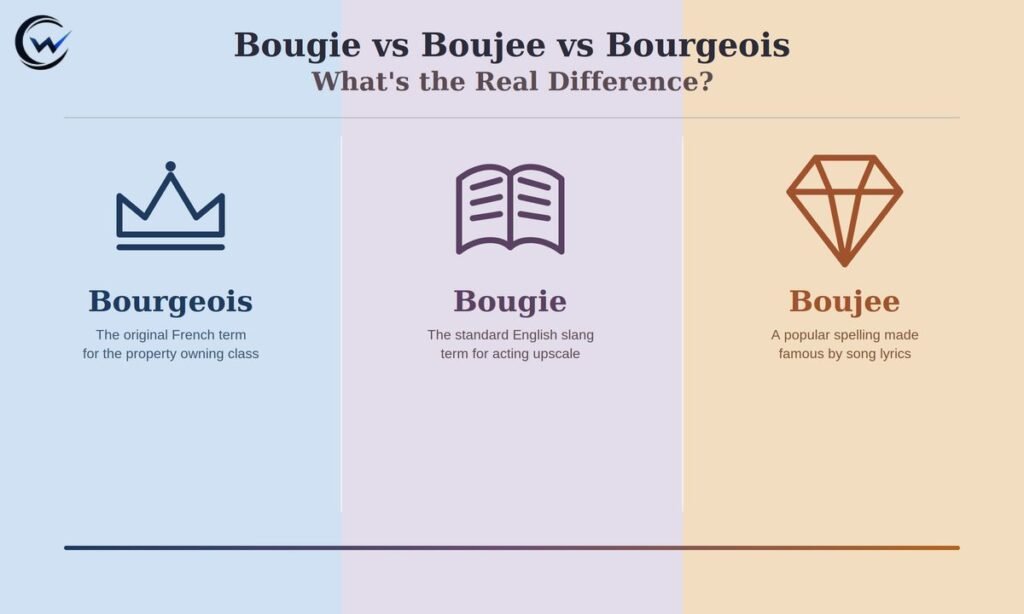
Bourgeois is the original French term, tied to economic and social class history. It’s a more academic or historical word now, often used in sociology or political discussions.
Bougie is the slang descendant, focused on personality and lifestyle rather than formal class structure.
Boujee is a stylized spelling of bougie, shaped almost entirely by music and internet trends rather than any separate meaning.
So really, you’re looking at one idea with three levels of formality: bourgeois for academic use, bougie for everyday slang, and boujee for casual, pop culture flavored writing.
Does Region, Generation, or Spelling Change the Meaning?
Bougie tends to show up more in general American slang across age groups, especially in writing and speech that predates the song’s popularity. Boujee skews younger and leans heavily on internet and music culture, especially among people who picked up the word after 2017.
Either way, the meaning stays exactly the same. Both words describe the same fancy, status conscious attitude.
What changes is the impression your writing gives off. Bougie reads as a bit more polished and widely accepted. Boujee signals that you’re plugged into music and internet culture. Neither choice will confuse a reader, so this really comes down to tone rather than clarity.
Quick Recap Before the FAQ
Bougie is your safe, standard choice for almost any writing situation. Boujee is the fun, song-inspired spin that works great in casual or trend-based content.
Neither one is “wrong” exactly, they just serve different purposes depending on where you’re writing and who’s reading it.
Frequently Asked Questions
Is it spelled bougie or boujee?
Bougie is the standard spelling recognized in slang dictionaries, while boujee is a popular phonetic variant made famous by song lyrics.
What does bougie mean in slang?
Bougie means acting wealthy, fancy, or high class, often used playfully to describe someone’s lifestyle or taste.
Is boujee a real word?
Boujee is widely used and understood, but it’s a slang spelling of bougie rather than a separate dictionary listed word.
Where does the word bougie come from?
Bougie comes from the French word “bourgeois,” which originally referred to the middle or property owning class in France.
Can you use bougie and boujee interchangeably?
Yes, they mean the same thing, but bougie fits formal writing while boujee works better in casual or social media content.
Final Thoughts
At the end of the day, both spellings point to the same idea: someone or something acting fancier than necessary. Bougie keeps things standard and safe for most writing. Boujee adds personality when you want your content to feel current and casual.
Pick based on your audience, stay consistent, and you’ll never second guess that group chat again.