

You’re halfway through a thank-you email or formal letter, and you pause over one word: curtesy or courtesy? Spell-check may not flag the mistake because both words actually exist.
That’s what makes this spelling mix-up so tricky. Use the wrong one, and your polished writing can suddenly look careless. Here’s the answer in simple terms.
Quick Answer: Curtesy vs Courtesy
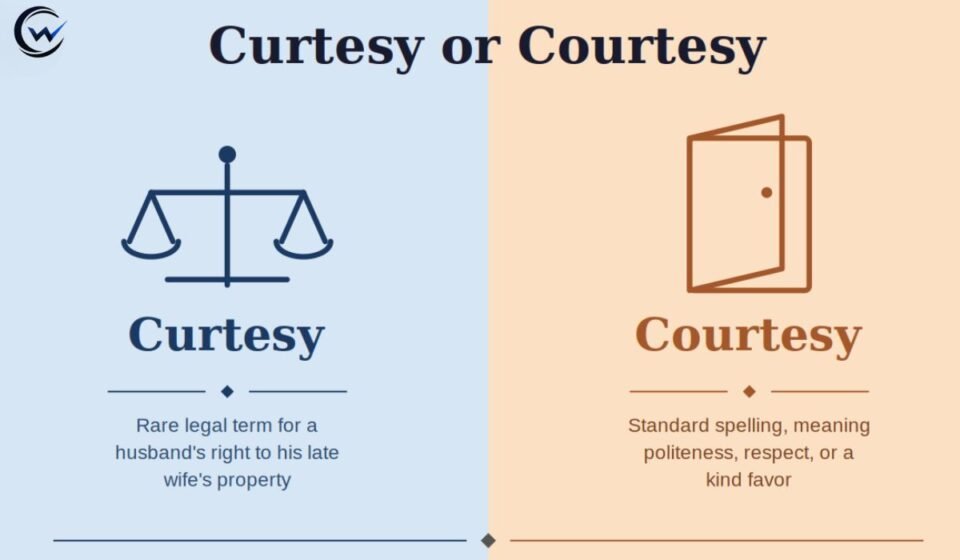
Courtesy is the word you almost always need. It refers to polite behavior, respect, consideration, or a kind favor.
Curtesy has a completely different meaning. It’s an old legal term describing a husband’s historical right to certain property interests in his deceased wife’s estate. Unless you’re discussing property law or legal history, courtesy is almost certainly the correct spelling.
What Does Courtesy Mean?
Courtesy describes polite, respectful, or considerate behavior toward others. It’s holding a door open for someone, saying please and thank you, or showing patience when someone needs help. These small gestures can make everyday interactions more pleasant and show that you respect the people around you.
The word can also describe a thoughtful gesture or service. For example, a courtesy call is made as a gesture of consideration. A courtesy discount is a price reduction offered as a favor rather than something the customer automatically receives. You can also see courtesy in professional phrases such as professional courtesy, courtesy copy, and extend the courtesy.
What Does Curtesy Mean?
Curtesy is a rare legal and historical term. Under traditional English common law, it referred to a husband’s right to certain interests in his deceased wife’s real property. This right generally depended on the marriage and the existence of a child capable of inheriting the property.
The term belongs mainly to historical property law. You aren’t likely to encounter it in everyday conversations, emails, or ordinary business writing. If you’ve never seen curtesy before, that’s perfectly understandable. It’s an uncommon word outside legal and historical contexts.
More Confusing Words Made Simple: Girlie or Girly
Curtesy vs Courtesy: Quick Comparison Table
| Word | Meaning | Common Usage |
| Courtesy | Politeness, respect, or a kind favor | Everyday speech, business writing, etiquette |
| Curtesy | A husband’s historical common-law right to certain property interests in his wife’s estate | Legal and historical writing |
The difference is simple once you know what each word means. Courtesy belongs to everyday language, while curtesy belongs mainly to historical legal terminology.
Where Does the Confusion Come From?
The two words look remarkably similar, and they also sound very close when spoken aloud. The only visible difference is the extra o in courtesy. Because curtesy is genuinely a real word, spell-check software may not identify it as an error.
Your brain can easily assume that curtesy is simply a shorter spelling of courtesy. In ordinary writing, though, that’s usually not the case. If you’re talking about manners, respect, or kindness, choose courtesy.
Etymology and Origin of Courtesy
Courtesy comes from the Old French curteisie, a word associated with courtly manners, refinement, and polite behavior. The term eventually entered Middle English during the medieval period.
Its early connection with courtly conduct helps explain its modern meaning. The basic idea has remained remarkably consistent. Courtesy describes behavior that shows consideration, respect, or good manners toward other people. Today, the word is much broader than its historical origins and appears in casual conversations, professional communication, customer service, and formal writing.
Etymology and Origin of Curtesy
Curtesy developed from the same broader linguistic family associated with courtesy. Over time, however, it became connected with a specific legal concept in English common law. The term described a husband’s historical property rights following his wife’s death.
Because the concept was limited to a specialized area of law, the word never became common in everyday English. Its unusual spelling remained associated with legal terminology. That’s why curtesy still appears occasionally in historical legal discussions while courtesy remains the everyday spelling.
How to Use Courtesy in a Sentence
Since courtesy is the word you’ll actually use, here are a few real examples.
“She showed real courtesy by letting the elderly man go ahead of her in line.”
“As a courtesy, the hotel offered us a late checkout.”
“Basic courtesy means texting back, even if it’s just to say you’re busy.”
How to Use Curtesy in a Sentence
Curtesy rarely comes up outside legal writing, but here’s how it looks when it does.
“Under common law curtesy, the husband held a life estate in his wife’s inherited land.”
“Modern property statutes have largely replaced curtesy with gender neutral inheritance rights.”
You will probably never need this word in casual writing. If you’re not studying law, skip it entirely.
Common Mistakes People Make
The most common mistake is writing curtesy when you actually mean courtesy. This often happens because the two spellings look and sound so similar. Another common confusion involves curtsy, which is a traditional gesture of respect made by bending the knees slightly. It is completely different from both courtesy and curtesy.
There’s also the incorrect spelling courtesey. That version adds an unnecessary e near the end and isn’t the standard English form. The easiest way to keep these words straight is to remember that courtesy means politeness, curtesy refers to a historical legal property right, and curtsy describes a respectful bending gesture.
Simple Trick to Remember the Difference
Here’s a simple way to remember courtesy. Think about the word court at its beginning. Historically, courtly behavior was associated with refinement, manners, and respect. That connection can remind you that courtesy relates to polite behavior.
For curtesy, think of its unusual spelling as a clue. It’s the rare legal term connected with old property law. So when you’re talking about kindness, manners, or consideration, choose the familiar spelling: courtesy.
Courtesy vs Curtesy in Professional Writing
In business emails, customer service messages, workplace policies, and formal documents, courtesy is overwhelmingly the correct choice. You’ll commonly see phrases such as professional courtesy, courtesy copy, courtesy call, courtesy reminder, extend the courtesy, and as a courtesy.
For example, you might write, “Please accept this courtesy reminder regarding your upcoming appointment.” You would only use curtesy when discussing its specific historical or legal meaning. Even then, the term may appear mainly in legal research or historical property discussions.
More Confusing Words Made Simple: Tieing or Tying
Is Curtesy Ever the Correct Choice?
Yes, curtesy is a legitimate word. It’s appropriate when you’re discussing the historical common-law doctrine involving a husband’s property rights. Law students, legal researchers, historians, and writers covering property law may encounter the term.
However, it isn’t an alternative spelling of courtesy. Using curtesy to mean politeness would be incorrect. If your sentence is about manners, kindness, consideration, or respect, use courtesy.
Why This Mix-Up Matters for Your Writing
Small spelling differences can change the meaning of a word completely. That’s especially important when two terms look almost identical. Using curtesy instead of courtesy can make a sentence sound confusing or inaccurate.
This matters even more in professional writing. A spelling mistake in an email, resume, article, or business document can distract readers from your main point. Knowing the distinction takes only a few seconds, and once you understand the meanings, the spelling becomes much easier to remember.
FAQ’s
Is curtesy a real word?
Yes. Curtesy is a real but uncommon legal term associated with a husband’s historical property rights under common law.
What is the correct spelling for politeness, curtesy or courtesy?
Courtesy is the correct spelling when you mean politeness, respect, consideration, or a kind gesture.
Is curtesy a typo of courtesy?
Not necessarily. Curtesy is a legitimate legal term, but when someone writes it in ordinary English, they often intended to write courtesy.
How do you remember the difference between curtesy and courtesy?
Think of courtesy as a word connected with manners and courtly behavior. Curtesy is the unusual legal spelling associated with historical property rights.
Is curtsy the same word as curtesy?
No. Curtsy describes a respectful bending gesture. Curtesy is a historical legal term, while courtesy means politeness or consideration.
Final Thoughts
Ninety-nine percent of the time, courtesy is the word you need. It covers politeness, respect, favors, and considerate behavior in everyday and professional writing.
Curtesy has a much narrower role in historical and legal writing. Keep curtesy for discussions of old property law, and use courtesy when talking about good manners. Once you know that difference, this spelling question becomes easy to settle.