

You called your nephew “chubby” at the family dinner and his mom gave you a look. Was that word actually okay to use? The chubby vs fat debate comes up more than people admit, especially when you’re trying to describe someone without sounding rude.
One word feels safe. The other can land like an insult. Here’s the actual difference, explained plainly.
Quick Answer: Chubby vs Fat
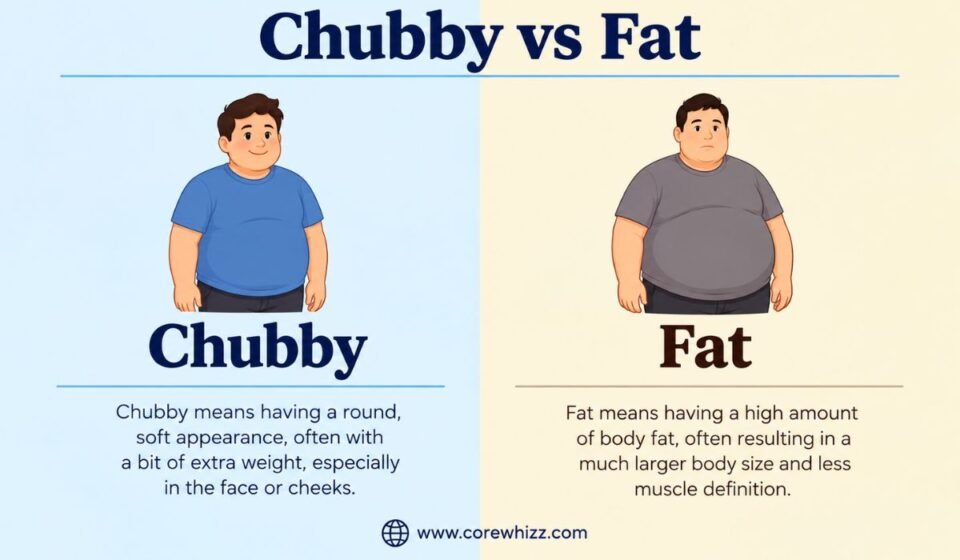
Chubby describes someone who is mildly overweight in a soft, often endearing way, and it’s commonly used for babies, kids, or as a gentle compliment.
Fat is a blunt, literal term for having excess body weight, and it can sound neutral, clinical, or harsh depending on tone and context. Chubby softens the message. Fat states it directly.
What “Chubby” Actually Means
Chubby means slightly plump or round, usually in a way that reads as cute or harmless. Think of a baby’s cheeks or a puppy’s belly.
It’s rarely used as an insult. People say “chubby cheeks” the way they’d say “rosy cheeks.” It implies softness, not a health judgment.
Chubby also tends to describe a mild degree of extra weight. Nobody calls a bodybuilder chubby. The word carries a small, manageable feel to it, almost like it’s describing something you want to squeeze rather than something to worry about.
There’s also a playful quality baked into chubby that most weight-related words lack. It shows up in nursery rhymes, cartoon character names, and pet nicknames. Nobody names their goldfish “Fatty” and expects it to sound sweet. “Chubby” gets that pass.
What “Fat” Actually Means
Fat is a direct, factual adjective describing a body with a higher amount of body fat. That’s it. No built-in emotion, though plenty gets added by tone.
The dictionary definition is neutral. Real-world usage is not. Fat has been used as a schoolyard insult for decades, which is why it carries weight most other body descriptors don’t.
Doctors and researchers often prefer clinical terms like “obese” or “overweight” specifically to sidestep the emotional baggage fat has picked up over the years.
Interestingly, fat is also one of the most literal words in the English language for describing size. You can have a fat wallet, a fat book, or a fat paycheck, and none of those uses carry any negativity at all. It’s only when the word attaches to a human body that the tone shifts.
Where These Words Came From
Fat traces back to Old English fǣtt, meaning fattened or plump, and it’s one of the oldest body-related words still in daily use. It has survived over a thousand years of language change without losing its core meaning.
Chubby is newer, showing up in English around the 1600s, likely linked to “chub,” a short, thick-bodied fish. Somebody looked at that fish and thought “yep, that’s the vibe,” and the word stuck around ever since.
Fat has had centuries to collect negative connotations, mostly through cultural attitudes toward weight rather than the word itself. Chubby got a lucky break by attaching itself early on to babies, pets, and eventually cartoon characters, which gave it a permanent soft edge.
Grammar Breakdown: Chubby vs Fat
Both words are adjectives, and both follow standard comparative and superlative rules.
- Chubby → chubbier → chubbiest
- Fat → fatter → fattest
Neither word requires special grammar handling in a sentence. The difference is entirely about connotation, not sentence structure or placement.
One small note worth remembering: fat can also function informally as a noun (“trim the fat,” “chew the fat”), while chubby cannot be used that way. That’s a rare use case, but it trips up writers occasionally when they’re checking word choice against grammar rules instead of tone.
Chubby vs Fat in Professional Settings
In professional writing, neither word is your best choice. HR documents, medical charts, and formal reports lean on terms like “overweight,” “obese,” or “higher body weight.”
If you’re writing a workplace email or a formal review of someone, skip both chubby and fat entirely. Neither sounds appropriate in that context, and one risks sounding unprofessional while the other risks sounding condescending or dismissive.
Copywriters working on health or wellness content should default to clinical, respectful language unless the brand voice is intentionally casual and the audience expects that tone. Even then, testing reader reaction before publishing is worth the extra step.
Chubby vs Fat in Casual Conversation
This is where the words actually diverge in real usage, and where most of the confusion actually starts.
Chubby shows up in casual, affectionate contexts: describing a baby, a pet, or even yourself in a self-deprecating joke. It rarely offends, and most people hear it as harmless.
Fat shows up more bluntly. Some people reclaim it confidently (“fat and proud”), while others still hear it as an insult, especially when directed at someone else without invitation or context.
Context and relationship matter more than the dictionary here. A close friend calling themselves fat as a joke is completely different from a stranger saying the same word about someone else in public.
Chubby vs Fat: Comparison Table
| Feature | Chubby | Fat |
| Tone | Soft, endearing | Blunt, direct |
| Common subject | Babies, kids, pets | Any age, often adults |
| Perceived rudeness | Low | Moderate to high |
| Formal usage | Avoid | Avoid |
| Degree implied | Mild | Any degree |
| Reclaimed usage | Rare | Increasingly common |
Common Mistakes People Make
Here are the slip-ups that cause the most awkward moments in everyday conversation.
- Calling an adult stranger “chubby” as if it’s automatically a compliment
- Using “fat” casually with someone you don’t know well
- Assuming chubby is always safe just because it sounds cute
- Using either word in written professional communication
- Ignoring that self-description and describing others follow different social rules
- Commenting on a child’s weight in front of the child or their parent without being asked
More Confusing Words Made Simple: Chonies or Chones: Meaning & Usage
A Real-Life Example of Getting It Wrong
Sarah meant well. She told her coworker’s toddler, “Look how chubby you are,” right in front of the coworker at a work picnic.
The coworker laughed it off in the moment. Later, she mentioned to a friend that it stung a little, since she’d been sensitive about her son’s weight after a pediatrician’s comment the week before.
Sarah never meant harm. But chubby, even in its gentlest form, can still land wrong depending on what’s going on behind the scenes that you don’t know about. Intent doesn’t always control impact, and this is exactly why word choice deserves more thought than most people give it.
How Common Is This Mix-Up?
Search data shows steady interest in “chubby vs fat,” “is chubby offensive,” and “chubby vs fat meaning” every month, which signals real, ongoing confusion rather than a one-time curiosity spike.
Body-related word choice searches tend to spike around New Year’s resolutions and back-to-school seasons, when people talk more openly about appearance, health, and family photos.
This isn’t a niche grammar question. It’s a genuinely common social skill people are trying to get right, and search trends back that up month after month.
Memory Trick to Keep Them Straight
Picture a chubby cheek versus a fat wallet. Chubby feels small, round, and cute. Fat is just a factual description of size, whether it’s a wallet, a book, or a body.
Another trick: chubby rhymes with “hubby” and “cubby,” both warm, small, familiar words. Fat stands alone, blunt and one syllable, with nothing soft attached to it.
If the mental picture is warm and small, reach for chubby. If it’s neutral and factual, fat fits better, as long as the setting allows for that kind of directness.
Step-by-Step Guide to Choosing the Right Word
- Ask who you’re talking about. Baby or pet? Chubby usually works fine.
- Ask your relationship to that person. Close friend joking about themselves? Either word might be fine between the two of you.
- Ask the setting. Professional or formal? Skip both words entirely.
- Ask if you were invited to comment at all. If not, consider staying quiet instead.
- When unsure, default to neutral language like “a little extra weight” or simply say nothing.
Mini Quiz: Chubby vs Fat
Test yourself with these six questions before moving on.
1. Which word is more commonly used to describe babies?
- A) Fat
- B) Chubby
Answer: B
2. Which word traces back to a fish name?
- A) Chubby
- B) Fat
Answer: A
3. True or False: Fat is always considered an insult.
Answer: False, context and reclaiming change its meaning
4. Which word is more appropriate in a medical chart?
- A) Chubby
- B) Fat
- C) Neither, use “overweight” or “obese”
Answer: C
5. What’s the comparative form of chubby?
- A) Chubbyer
- B) Chubbier
Answer: B
6. Which word can also function as a noun in casual speech?
- A) Chubby
- B) Fat
Answer: B, as in “trim the fat”
FAQ’s
Is chubby a nicer word than fat?
Chubby generally sounds softer and more affectionate than fat, especially when describing children, though tone and context still shape how either word lands in the moment.
Can you call an adult chubby without it being rude?
It depends heavily on your relationship, since strangers or acquaintances may take it as rude even though it’s meant kindly by the person saying it.
Is fat ever an okay word to use?
Yes, especially in body-positive spaces or self-description, though using it about someone else uninvited still carries real risk of being taken the wrong way.
What should I say instead of chubby or fat?
Neutral phrases like “carrying extra weight” or simply avoiding the topic altogether work better in most social and professional situations.
Why does chubby sound cute but fat doesn’t?
Chubby historically attached itself to babies, pets, and cartoons, while fat picked up decades of use as a playground insult, shaping how each word feels to most listeners today.
Final Thoughts
Chubby and fat both describe extra weight, but they carry completely different emotional weight of their own. Chubby leans soft and affectionate. Fat leans blunt and factual, with a long history of being used unkindly.
Neither word belongs in formal writing, and both require reading the room before they leave your mouth. Get that part right, and the actual vocabulary choice takes care of itself.